


New Report Highlights USD 4 Billion EV Charging Investment Opportunity Across Emerging Economies
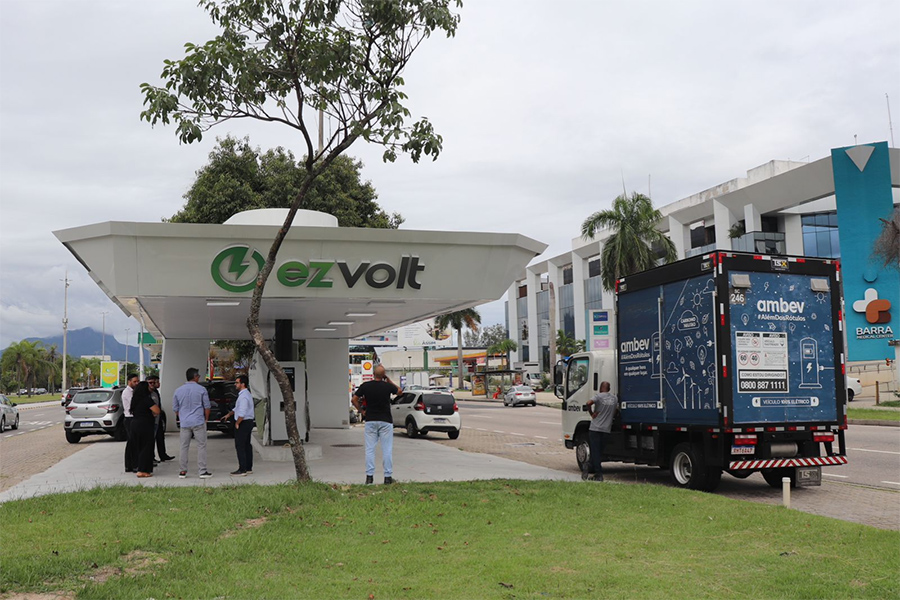
A new report launched by C40 Cities and the World Bank Group’s International Finance Corporation (IFC), in collaboration with The Climate Pledge through the Laneshift Programme, and the Swiss State Secretariat for Economic Affairs (SECO), highlights how city and national governments in emerging economies can play a decisive role in accelerating the implementation of electric vehicle (EV) charging infrastructure. The report, Market Analysis of Electric Vehicle (EV) Public Charging Infrastructure in Cities, analyses market trends, investment needs, regulatory frameworks and city-led initiatives across four countries: Brazil, Colombia, Mexico and India.
The analysis comes at a critical moment for the global electric mobility transition. According to the International Energy Agency’s Global EV Outlook 2025, the global stock of public charging points has more than doubled since 2022, surpassing 5 million chargers worldwide, with around 1.3 million new public chargers added in 2024 alone, representing an annual growth of more than 30% in the past five years. Projections show continued rapid growth in electric mobility over the next decade, with investment requirements for EV charging infrastructure across the four markets estimated to reach approximately USD 3.8 billion by 2035 (USD 1.9 billion in India, USD 980 million in Brazil, USD 760 million in Mexico and USD 184 million in Colombia).
Despite this rapid progress, deployment remains highly uneven, particularly across emerging economies where affordability, reliability and access to charging infrastructure continue to constrain EV adoption. Investments in charging infrastructure assets targeting personal mobility face the risk of slower-than-expected EV uptake, leading to lower utilization, revenues, and delayed profitability. This can lead to weak returns on investment and deters investors from investing in this sector.
The report finds that the rapid growth in electric vehicle adoption is creating unprecedented demand for charging infrastructure across both mature and emerging markets. In Brazil, Colombia, Mexico and India, EV uptake has expanded dramatically since 2021, driven by improving model availability, supportive policy frameworks, and declining technology costs. Across the four countries, sales grew from around 40,000 vehicles in 2021 to approximately 1.08 million vehicles in 2025, representing an annual growth rate of nearly 130%. By 2025, EVs accounted for approximately 6.5% of new vehicle sales in Brazil, 5.9% in Colombia, 6.2% in Mexico, and 3.7% in India.